

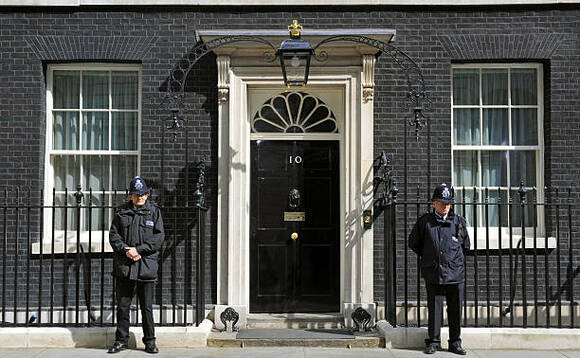

As Andy Burnham becomes the UK’s 59th prime minister investment commentators have speculated on what his administration could mean for different areas of the market.
UK equities
Douglas Scott, investment manager at Aegon Asset Management, believes the M&A trend in the UK equity market will continue as Burnham takes the reigns but says overseas buyers remain wary of the UK domestic market.
“International buyers are not seeing the UK domestic market as attractive yet, and the revolving door at Westminster for Prime Ministers has not helped that,” he said.
“The UK equity market represents 3% to 4% of global equity market capitalisation, so has become for some global investors a mere side show. I believe we will continue to see a trend of UK companies exiting for a US listing with perhaps some larger headline names booking a flight.”
He added: “As we enthrone the latest in a high turnover line of Prime Ministers there is a strong feeling that this is the last roll of the dice for UK plc, and that failure will result in another revolution not just of the No. 10 revolving door but towards an even more dramatic change in government.”
Smaller companies
Stuart Widdowson, co-portfolio manager of Odyssean Investment trust, says that while the instinctive response from many investors is to shun UK small-caps on the assumption they are closely tied to the domestic economy and the uncertainty linked to the change in leadership, the medium-to long-term value creation prospects of high-quality smaller UK firms are largely independent of who occupies Downing Street.
“Many smaller companies are UK-listed in name only, generating the bulk of their operations, revenues and profits overseas,” he said. “Others are being reshaped from within, with proactive management teams driving genuine strategic and operational transformation. In both cases, value creation owes little to a supportive UK macro environment or fiscal backdrop and as such they are largely insulated from the domestic picture.”
He adds these businesses are well placed to outperform if the wider market is dragged down by political uncertainty, and equally well placed to attract overseas acquirers due to UK uncertainty feeding into the ongoing wave of M&A activity in UK small caps.
“More broadly, the case for smaller companies rests on several supporting factors,” he said. “Historically, small caps have outperformed large caps over the long run, with recent underperformance viewed as anomalous and small caps well placed for a catch-up.
“Valuations also look attractive today, a strong historical indicator of future returns, particularly against expensive US markets. Evidence from the 1970s suggests small caps can deliver for patient investors even amid political turmoil.
“Despite the UK's persistent growth challenge, pockets of genuine earnings growth remain available for selective stock-pickers, and international buyers are increasingly recognising this value, with rising overseas interest and M&A activity offering a sign that domestic pessimism may not be fully justified.”
Gilts
David Roberts, head of fixed income at Nedgroup Investments, says a sense of stability will prevail following Burnham’s appointment, which will be beneficial for the gilt market.
"If you'd asked me a few months ago I would never had said this, but the new UK Prime Minister Andy Burnham is almost like Mr Stability at the moment,” he said. “It's almost like the old saying, the lesser of several evils... he's Mr Coalescence, the glue that could bind the current government together. So, the market doesn't dislike that, not least if the alternative was a snap election.
“There are worse outcomes for the gilt market and arguably for UK politics in the short term than Burnham winning and coalescing the Labour Party around him – stability, two years to convince the electorate especially if he sticks to the fiscal plan can see gilts rally further than they already have.”
He added: “Nedgroup's neutral gilt weighting is about 5% – we're zero at the moment having taken the recent rally as a chance to cut from an overweight of about 10%. In absolute terms, we think they're okay. Just in relative terms, we prefer the US marginally. We prefer Europe and we definitely prefer Australia.”